


Batch Sync
Overview
The Batch Sync module provides comprehensive bulk data synchronization capabilities for synchronizing multiple order and transaction records with external systems simultaneously through CSV file uploads. It offers real-time progress tracking, status monitoring, and detailed reporting for all synchronization operations processed through the Juspay payment platform.
This module is designed for a wide range of users, including:
Operations Teams: For synchronizing large volumes of order data efficiently and monitoring sync performance across different external systems and gateways with comprehensive operational logs.
Integration Teams: For bulk data synchronization processing, system integration management, and tracking sync status across multiple order records with detailed integration trails.
Technical Teams: To synchronize order and transaction data with external systems in bulk, track synchronization status, and provide real-time data consistency across integrated platforms.
Accessing the Module
Log in to the Juspay dashboard.
From the main navigation menu on the left, click on Payments.
Select Bulk Operations from the Payments submenu.
Click on the Sync tab from the bulk operations navigation.
The navigation URL for this module is https://portal.juspay.in/batch/batch-sync
 .
.
Step-by-Step Usage Instructions
Creating Batch Sync
Step 1: Access the Batch Sync Interface
Navigate to the Batch Sync module using the steps above.
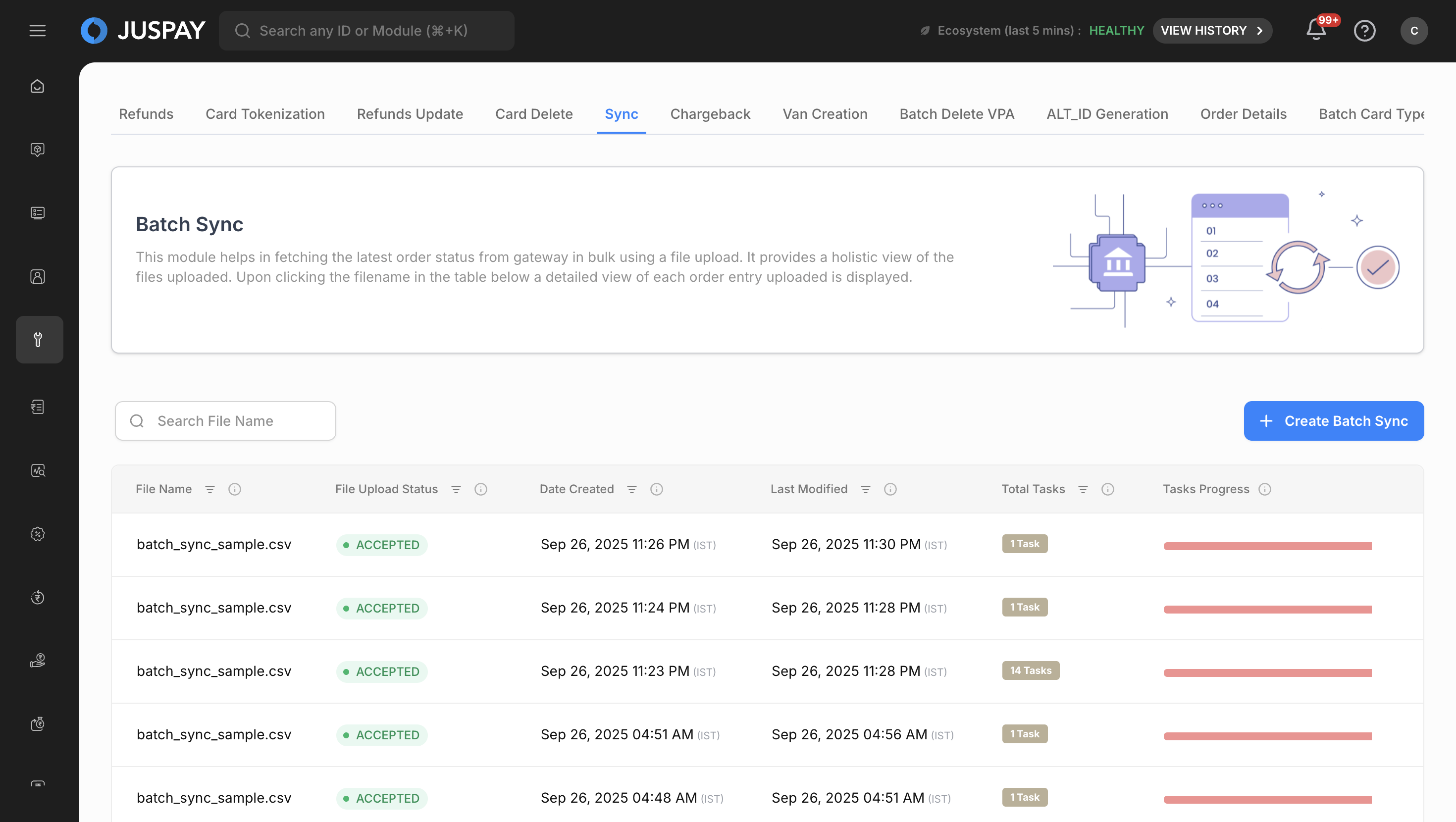
You will see the main dashboard with a description: "This module helps in creating data synchronization in bulk using a file upload. It provides a holistic view of the files uploaded. Upon clicking the filename in the table below a detailed view of each sync operation uploaded is displayed."
The interface displays any previously uploaded batch sync files in a table format.
Step 2: Initiate New Batch Sync Upload
Click the "Create Batch Sync" button (visible only to users with appropriate permissions).
If maker-checker workflow is enabled for your account, you will first see a description modal:
Enter a description for the batch sync request in the text field.
Click "Submit" to proceed to the file upload interface.
If maker-checker is not enabled, you will directly access the file upload interface.
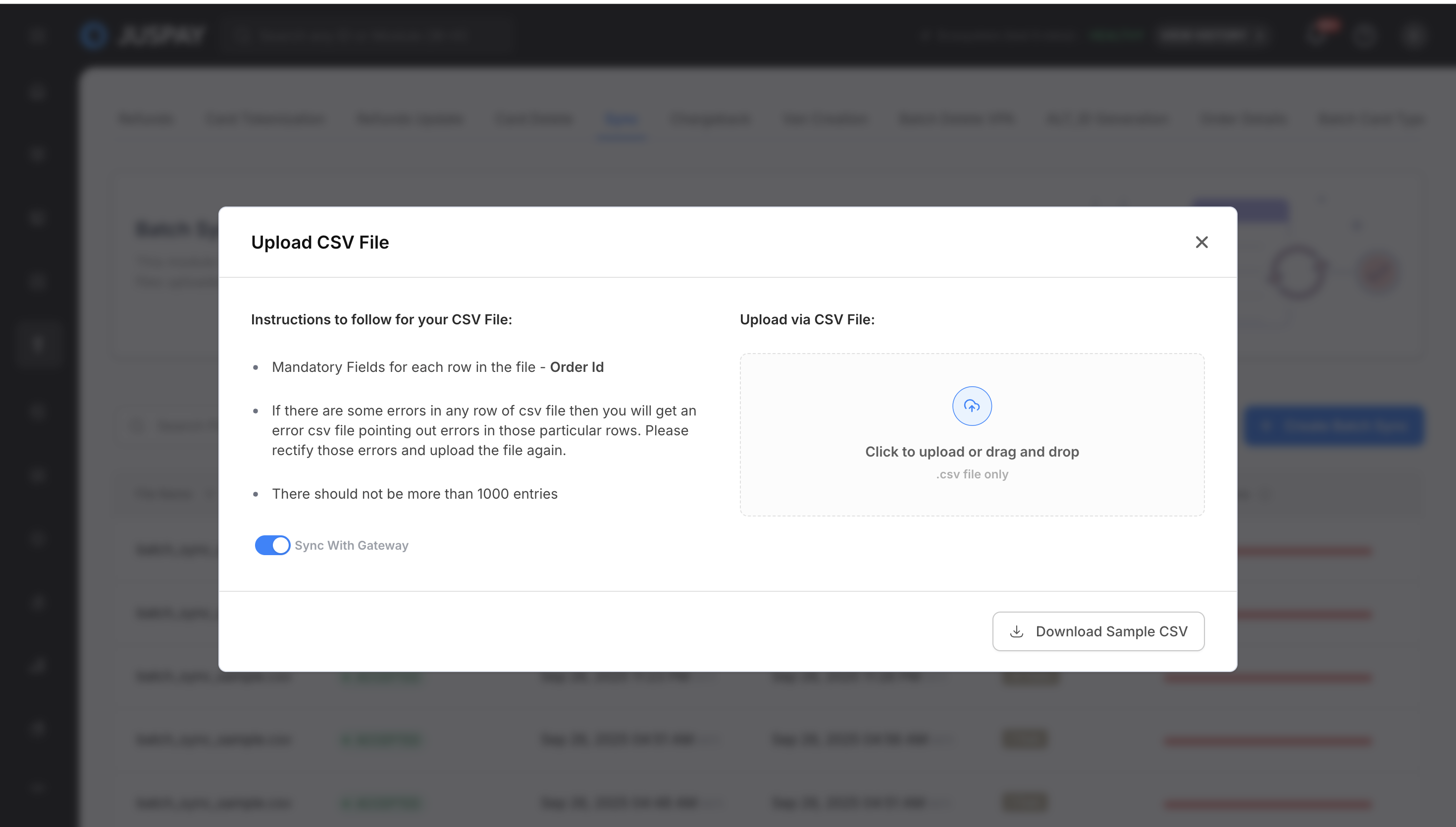
Step 3: Prepare and Upload CSV File
Download Sample File: Click on the sample file link to download the CSV template (
batch_sync_sample.csv).Prepare Your Data: Fill in your sync data following the CSV field specifications (see table below).
File Limitations:
Maximum 1000 rows per file
CSV format only
File size limitations apply
Upload Process:
Click "Choose File" or drag and drop your CSV file
The system validates the file format and structure
Mandatory fields are checked (Order ID)
Column types are validated (Order ID as String, Transaction ID as String, Unique Request ID as String)
Step 4: Configure Sync Options
Sync With Gateway Toggle:
What it is: A toggle option that enables automatic synchronization with payment gateways during the upload process
What it does: When enabled, the system will automatically sync the uploaded data with connected payment gateways in real-time, ensuring immediate data consistency across all integrated systems
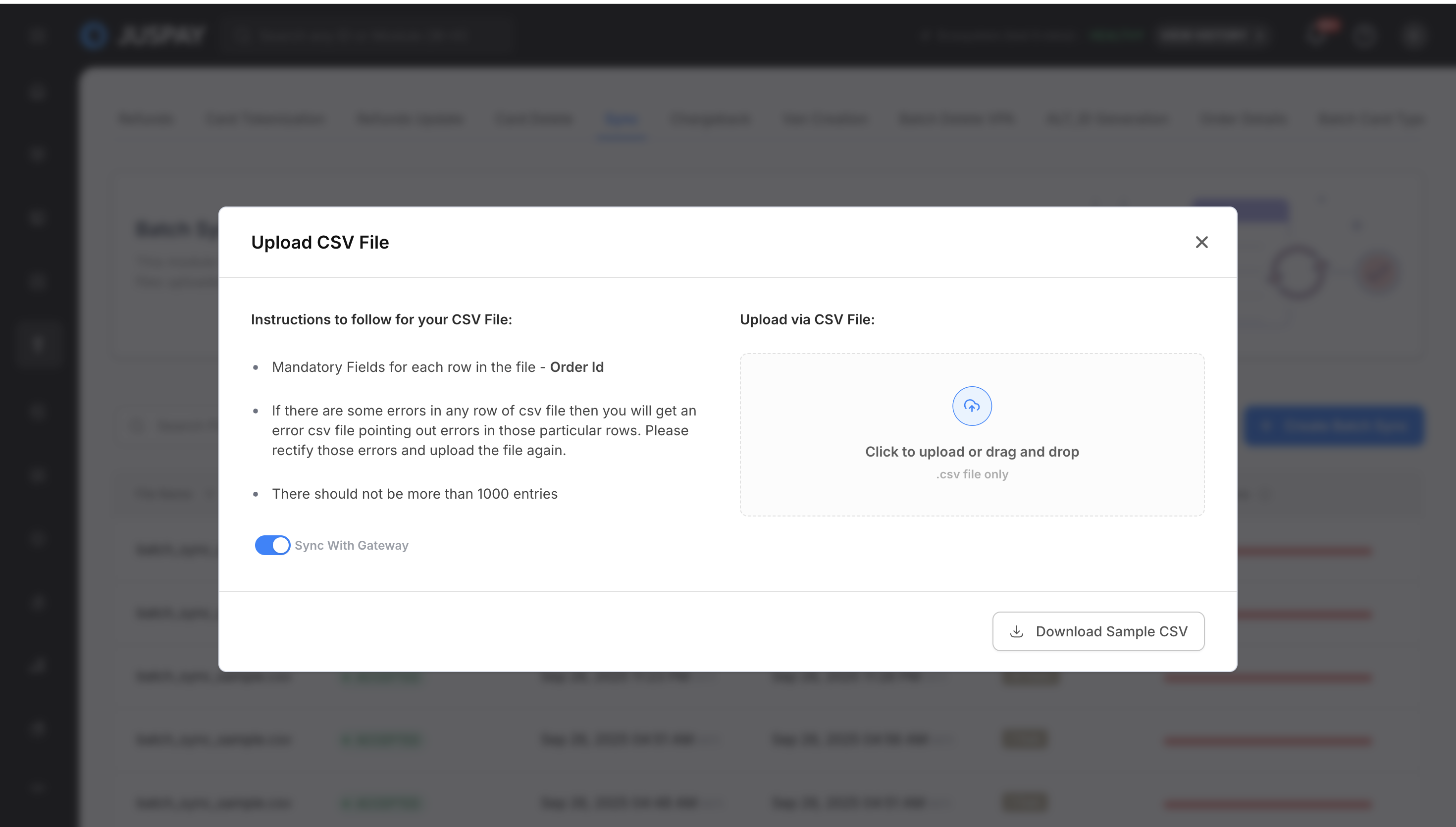
Batch Sync - Sync with Gateway Toggle States:
Enabled (Blue): Real-time gateway synchronization will occur during processing
Disabled (Grey): Standard processing without immediate gateway sync
Step 5: File Processing and Validation
File Validation: The system performs the following checks:
CSV format validation
Mandatory field presence (order_id)
Data type validation for each column
Order ID format validation
Row count validation (maximum 1000 rows)
Error Handling: If validation fails, specific error messages are displayed:
Missing mandatory fields
Invalid order ID format
File format errors
Row limit exceeded
Successful Upload: Upon successful validation:
File is queued for processing
Batch ID is generated
Initial status is set to processing
Sync operation begins with external systems
Step 6: Monitor Processing Status
Status Indicators:
ACCEPTED: Successfully synchronized data (Green indicator)
FAILED: Failed synchronization attempts (Red indicator)
QUEUED: Sync requests waiting in processing queue (Blue indicator)
Monitoring and Managing Batch Sync
Viewing Batch Sync Details
Table View: The main interface displays all uploaded batch files with:
File Name: Name of the uploaded CSV file
File Upload Status: Current processing status with color-coded labels
Total Records: Number of sync requests in the file
Date Created: File upload timestamp
Last Modified: Last update timestamp
Total Tasks: Number of sync requests in the file
Tasks Progress: Visual progress bar showing completion status
Actions: Sync with Gateway button for manual synchronization
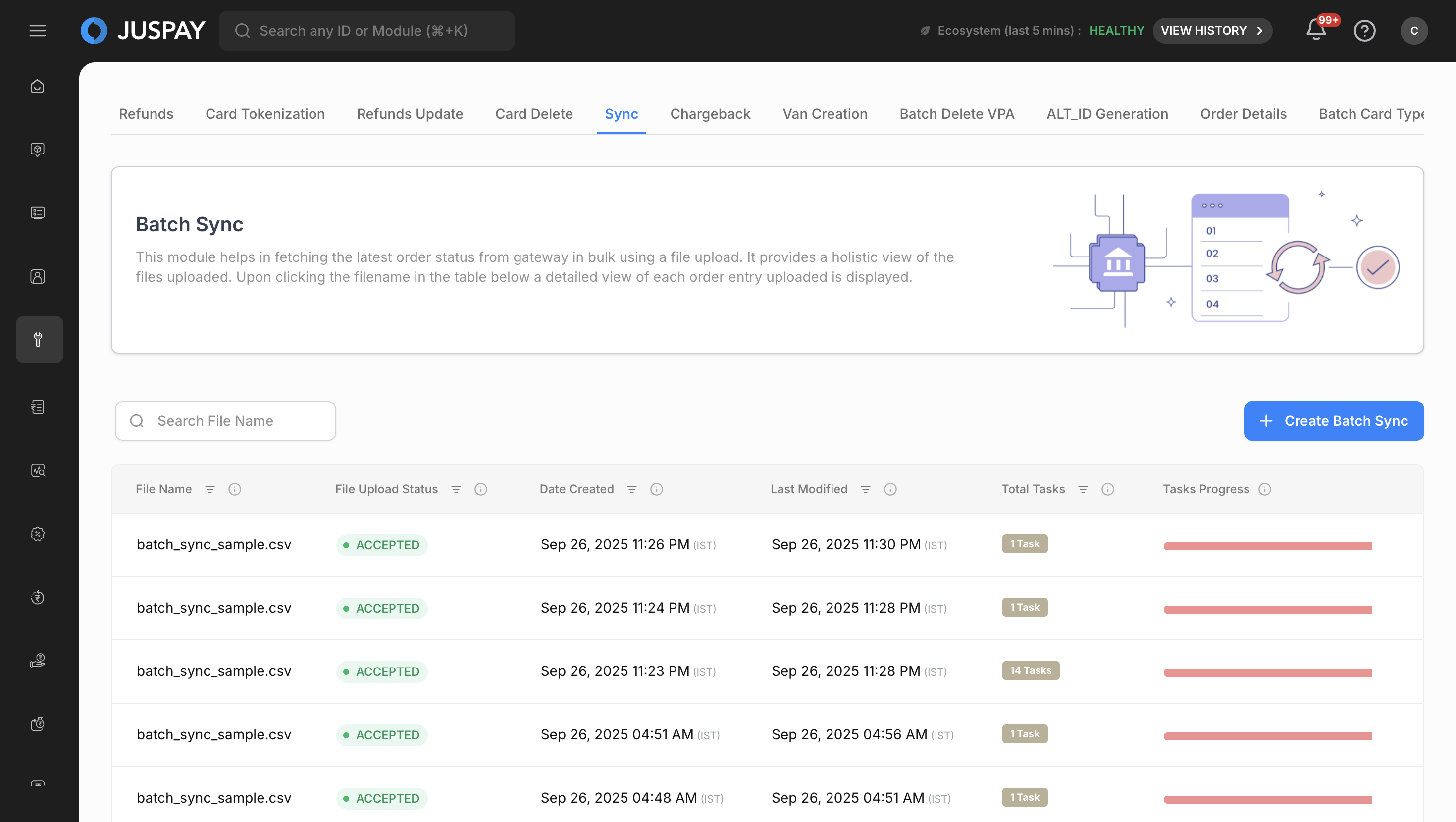
Batch Sync - Table View Detailed View: Click on any filename to access detailed information:
Batch Details Card: Expandable/collapsible interface showing:
Batch ID: Unique identifier for the uploaded file
Date Created and Date Updated timestamps
Total Records with count formatting
Current status with color-coded indicators
Progress Statistics: Individual task counts for:
Total Accepted Tasks: Successfully synchronized records
Total Rejected Tasks: Failed synchronization attempts
Total Queued Tasks: Records in processing queue
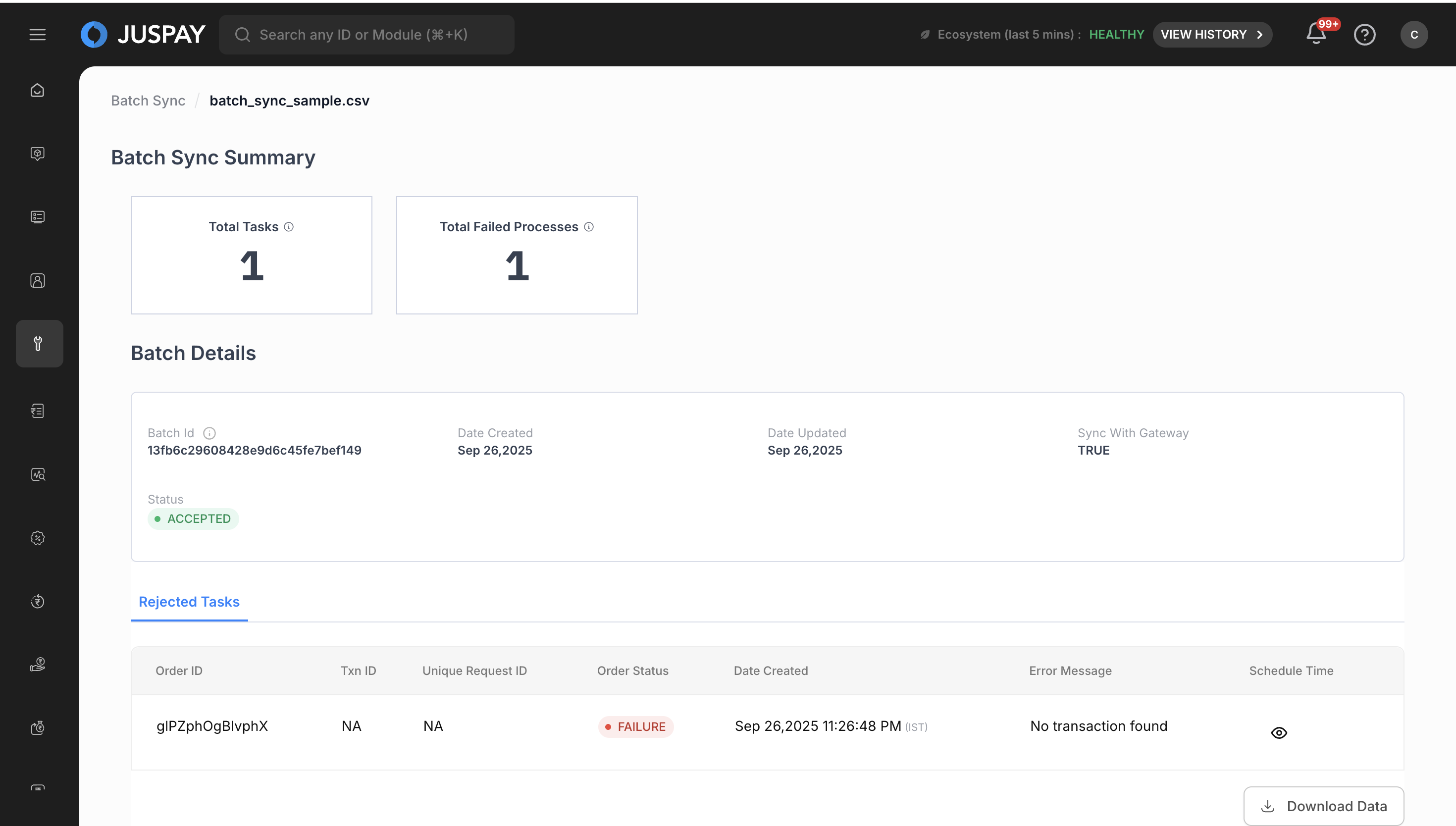
Batch Sync - Detailed View
Search and Filter Capabilities
File Name Search:
Use the search input field with search icon
Enter filename to filter results
Search is case-sensitive and supports partial matches
Clear search using the cross icon
Table Sorting:
Click column headers to sort data
Available sorting for: File Name, Status, Total Records, Date Created, Total Tasks
Toggle between ascending and descending order
Data Export and Download
Downloading Processed Data
Access Download: Click the "Download Data" button in the batch details view.
CSV Export: Downloads include:
Serial numbers (S.No column)
All processed sync data with the following headers:
Order ID
Transaction ID
Unique Request ID
Sync Status
External System Response
Gateway Sync Status
Task Status
Error Message
Created At
Updated At
File Format:
CSV format with comma-separated values
Filename format:
batch_sync.csvIncludes header row with column names
CSV File Upload Specifications
CSV Field Requirements
|
Field Name
|
Mandatory/Optional
|
Data Type
|
Description
|
Sample Value
|
Validation Rules
|
|---|---|---|---|---|---|
order_id
| Mandatory
| String
| Order identifier for synchronization with external systems
| "ORD_123456789"
| Must be a valid order ID string, cannot be empty
|
txn_id
| Optional
| String
| Transaction identifier for tracking sync operations
| "TXN_987654321"
| String value, can be empty
|
unique_request_id
| Optional
| String
| Unique synchronization request identifier for tracking
| "SYNCREQ001"
| String value, can be empty
|
Order ID Validation Rules
Order ID Requirements:
Format: Alphanumeric string identifier
Length: Must be non-empty string
Characters: Letters, numbers, underscores, and hyphens allowed
Case Sensitivity: Case-sensitive matching
Validation Process:
Format Check: Order ID must be valid string format
Length Validation: Cannot be empty or null
Character Validation: Only allowed characters accepted
Uniqueness: Each order ID should be unique within the batch
Transaction ID Format Requirements
Format Specification:
Type: Optional string identifier
Purpose: Links sync operation to specific transaction
Format: Alphanumeric string with special characters allowed
Valid Examples: "TXN123456", "TRANSABC_789", "T-2025-001"
Usage: Helps track sync operations at transaction level
Unique Request ID Specifications
Request ID Details:
Purpose: Provides unique tracking for each sync request
Format: Custom string identifier
Usage: Enables detailed tracking and debugging of sync operations
CSV Format Examples
Complete CSV Format with Sample Data:
File Upload Constraints
Maximum Rows: 1000 rows per CSV file
File Format: CSV (Comma Separated Values) only
Encoding: UTF-8 encoding recommended
File Size: Standard file size limitations apply
Column Order: Must match the specified header format (orderid, txnid, uniquerequestid)
Empty Values: Optional fields can be left empty but commas must be maintained
Order ID Requirement: Order ID field is mandatory and cannot be empty
Troubleshooting
File Upload Validation Errors:
"Invalid file format": Ensure file is in CSV format with proper comma separation
"Missing mandatory fields": Verify that order_id column is present and not empty
"Row limit exceeded": Reduce file size to maximum 1000 rows per upload
"Invalid order ID format": Check that order_id field contains valid string values
"Empty order ID": Ensure all order_id fields have non-empty values
Permissions and Roles
Access to the Batch Sync module is controlled by the following permissions:
Sync Module Access: Required for accessing the batch sync interface (ACL:
orders)Sync Write Permission: Required for creating and uploading batch sync files (ACL:
orderswith ReadWrite access)Sync Read Permission: Needed to view batch sync status and download processed data (ACL:
orders)